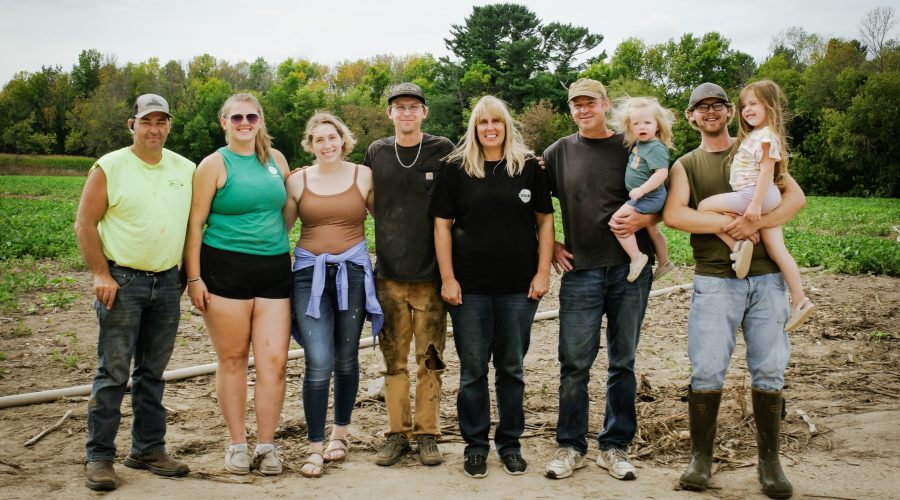
A Visit to Utecht’s Homegrown Pork
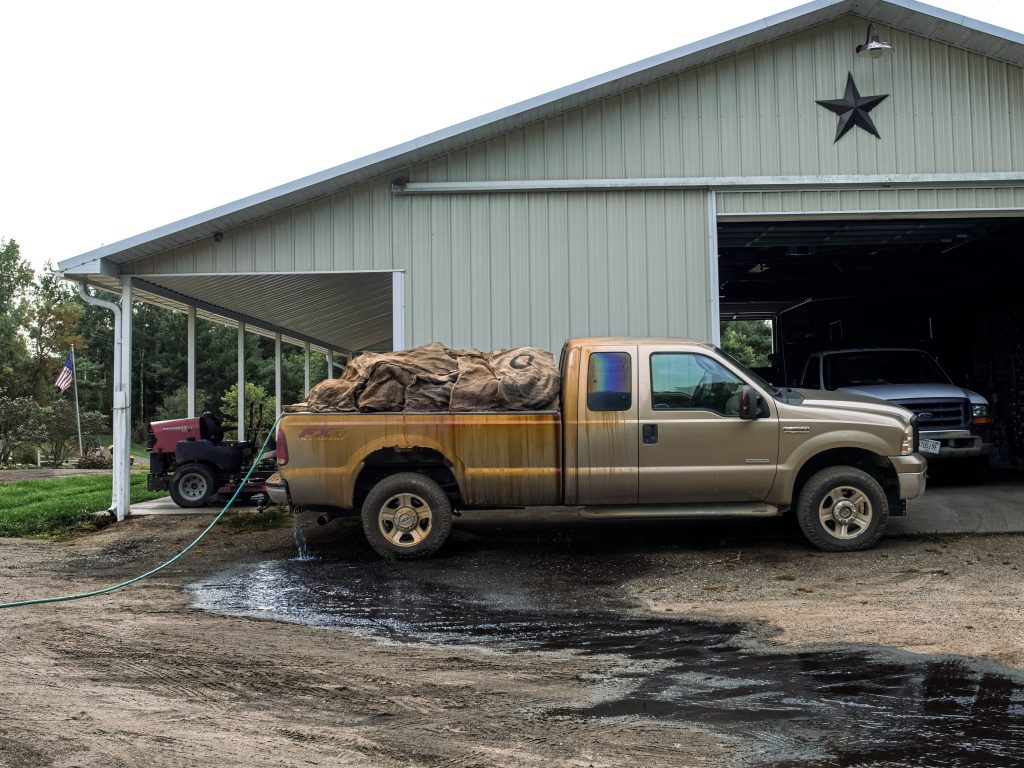
After a long drive through rolling cornfields in eastern Wisconsin, we spotted their address on a mailbox and turned onto the driveway. A long, winding dirt road led us through an exquisite forest lined with prairie grasses and goldenrod until we reached their house. Gus and I parked, hopped out, and were greeted by the Utechts. The youngest, a preschooler, ran up, smiled, and waved before turning and darting away. They had just returned from harvesting sweetcorn and were cooling off the piles of fresh-picked cobs by hosing them with frigid water in the back of the pickups.
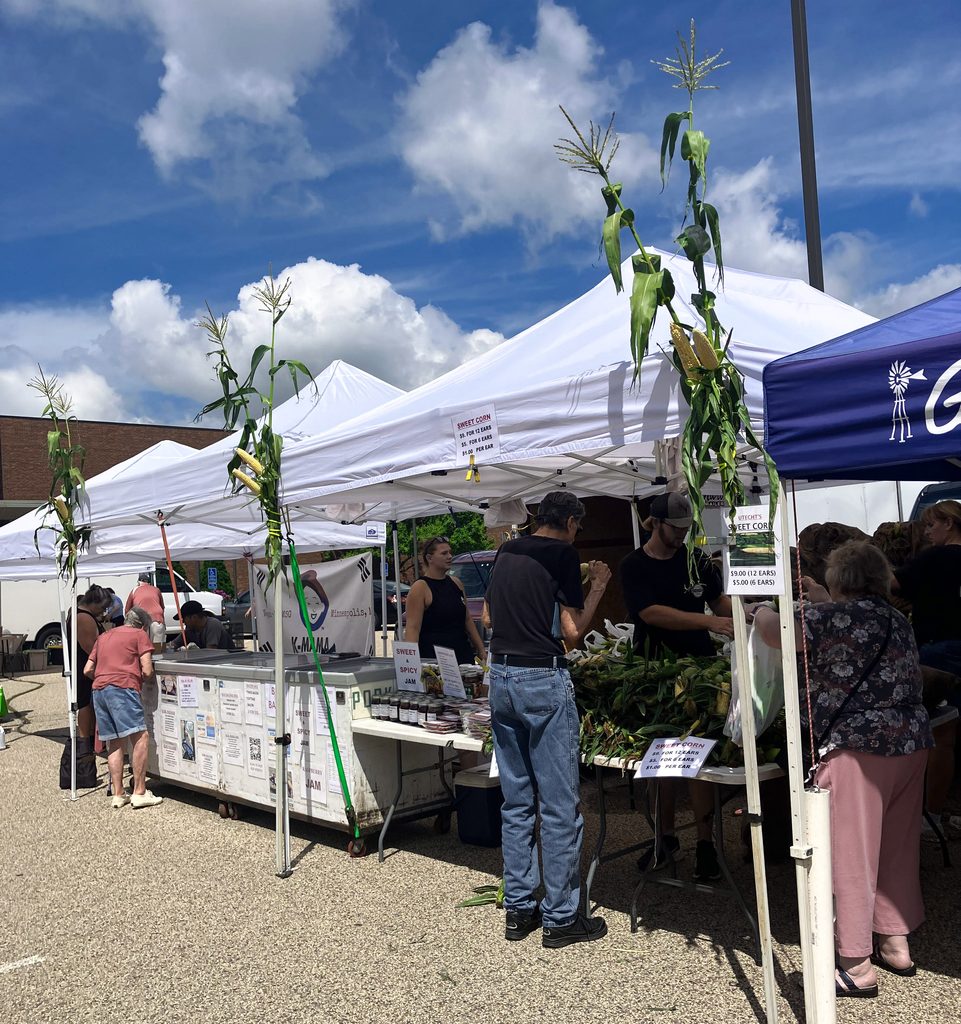
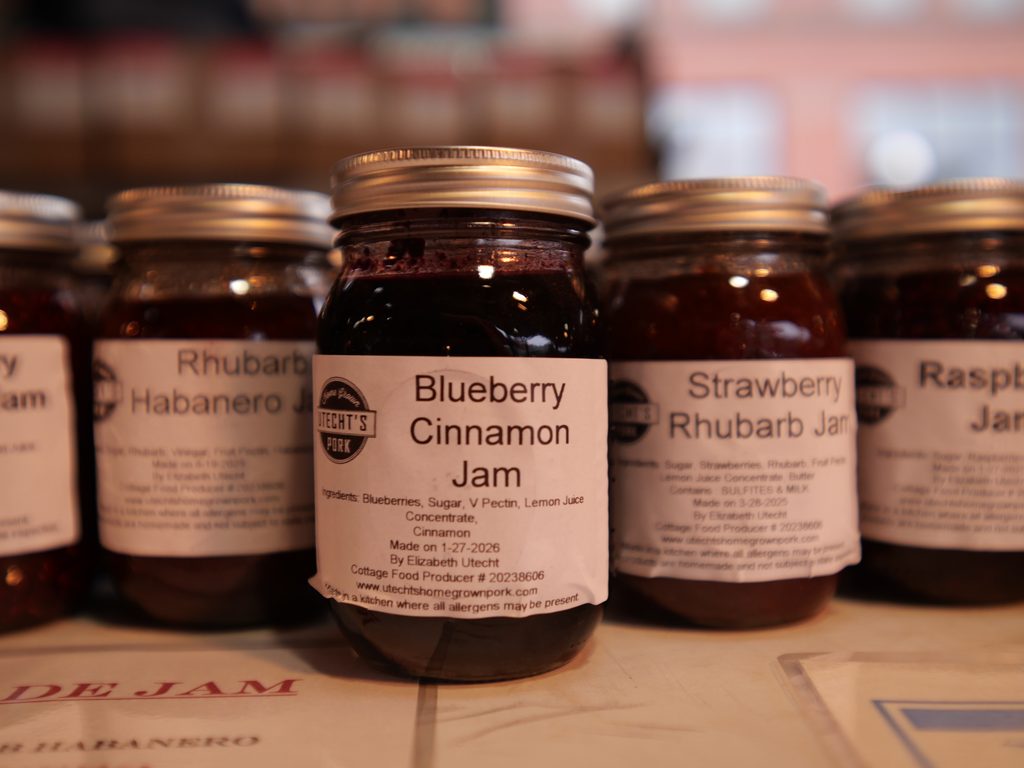
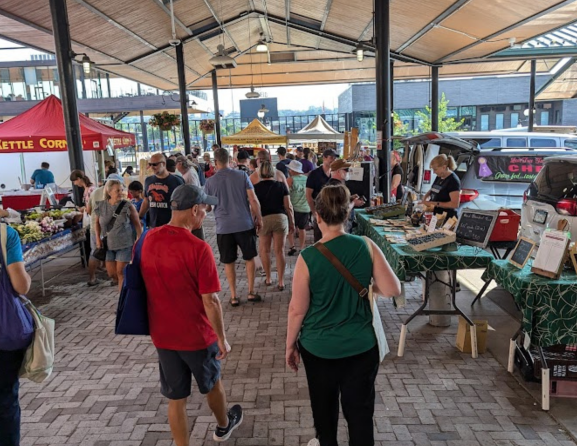
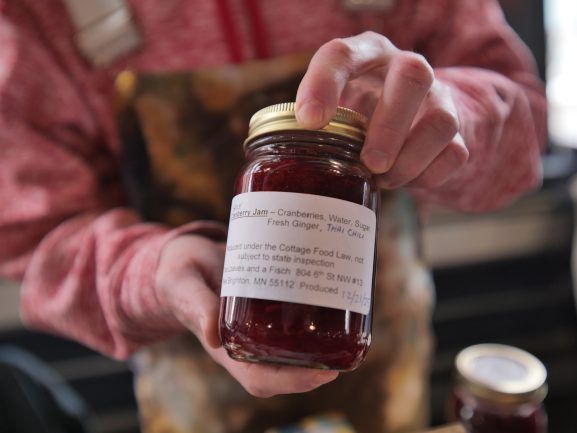
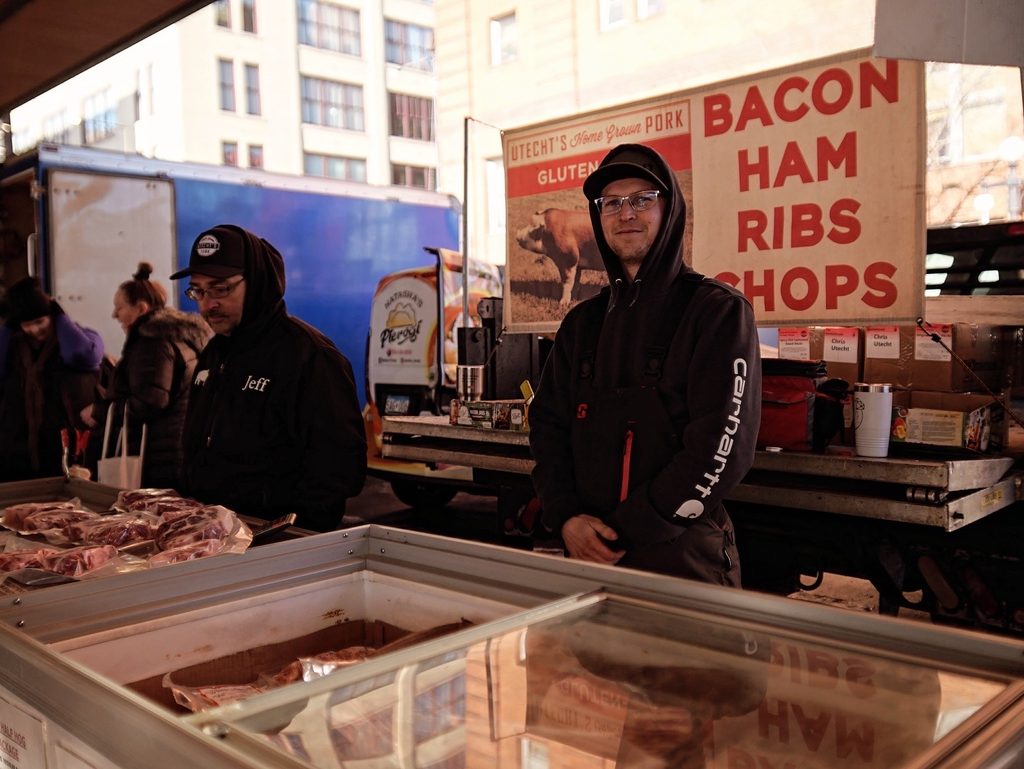
Utecht’s Homegrown Pork Farm raises heritage hogs. In the summer markets, you can’t miss their tent. It’s adorned with tall corn stalks, tassels waving in the wind. With eye-catching piles of stacked corn so tasty you’d be tempted to take a bite right there in the farmers’ market aisle, it’s easy to miss that they also sell homemade jams. They sell their pork and jams year-round at farmers’ markets.
After we all introduced ourselves, Brian apologized; he couldn’t give us a tour. A neighbor called, and he had to run over some farm equipment. ‘When a neighbor calls, you gotta help them. And they’ll help you right back when you need it.” He explained as he headed out. His dad, Chris, would show us around.
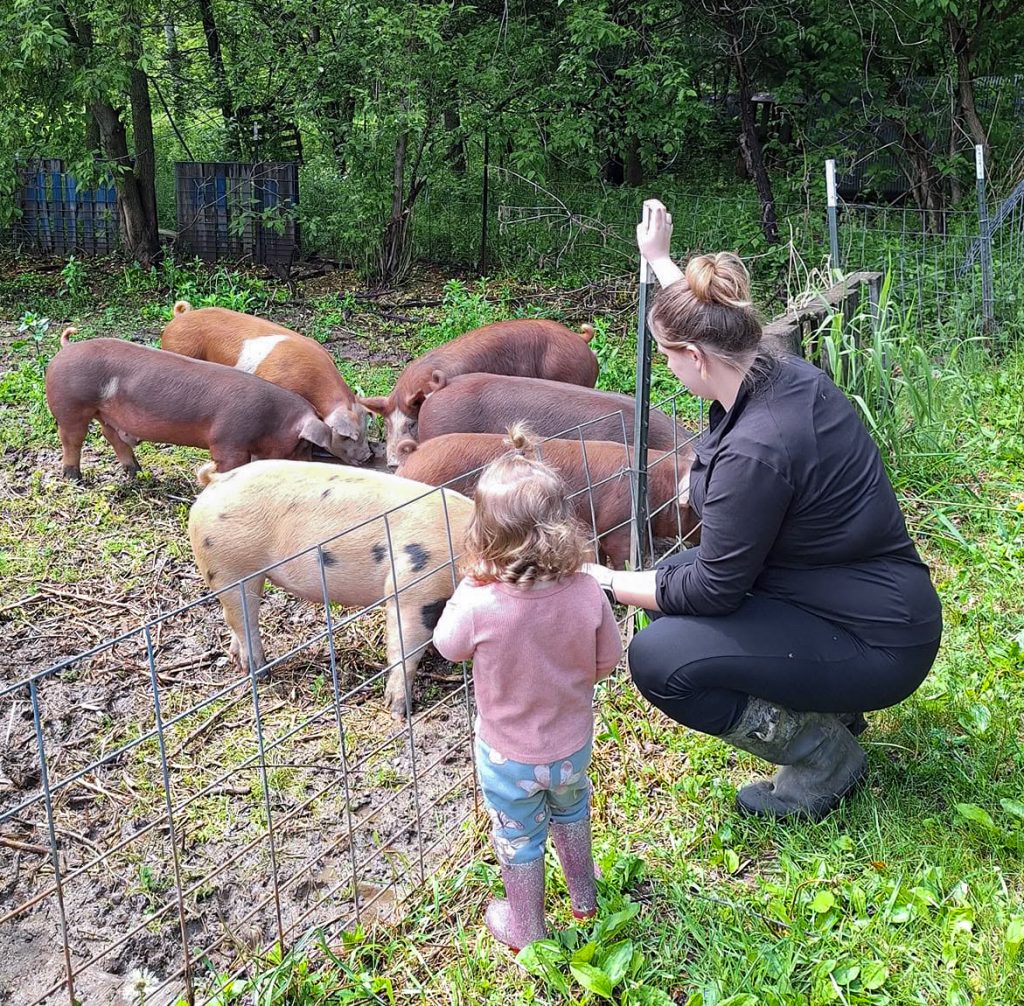
Utecht’s farm raises Hereford and Hereford cross hogs, a heritage breed sought after for its marbled meat. “It’s not a commercial pig like what you’d get from the grocery store. They don’t grow as fast,” Chris explained.
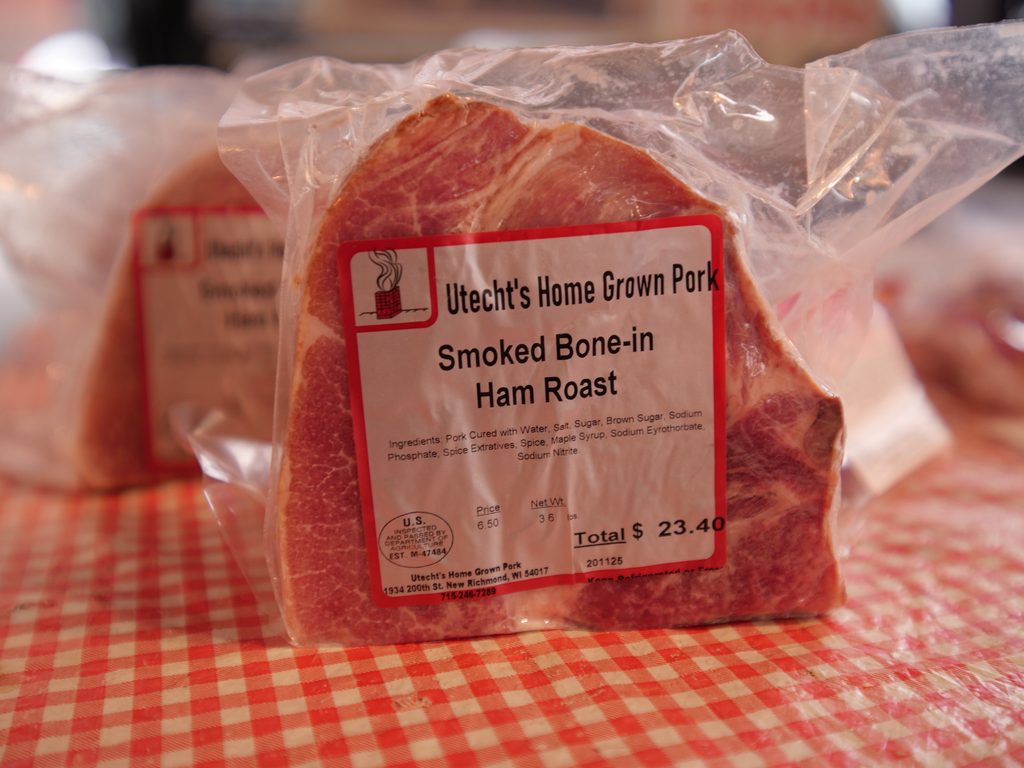
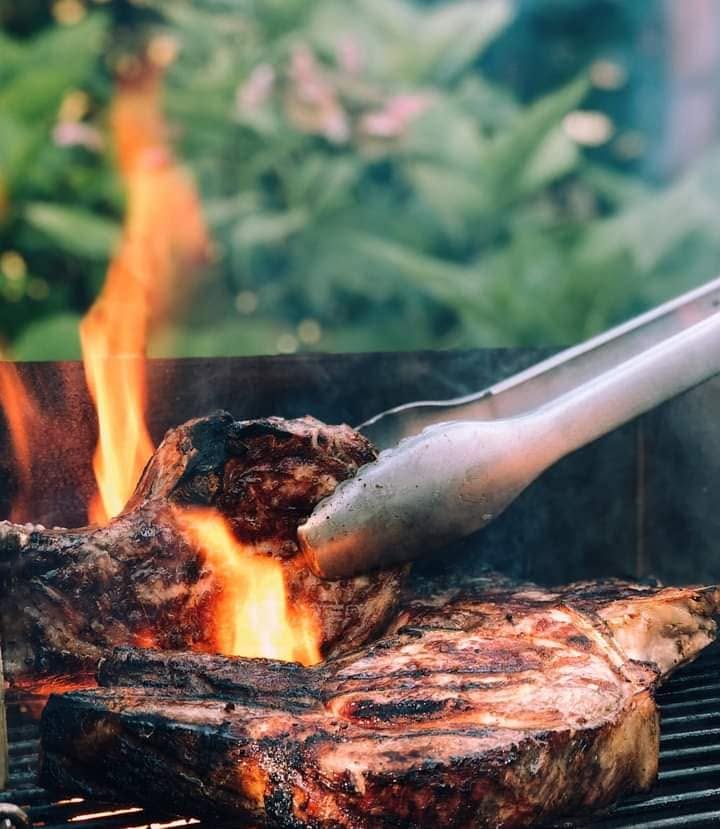
You can see the difference in the cuts at the farmers’ market; the intramuscular fat shows as thin white streaks and flecks throughout the cuts, instead of just outer layers of fat on conventional meat. As the marbled fat melts during cooking, it bastes the meat from within, evenly releasing and preserving juiciness, buttery tenderness, and complex, savory flavor.
Purebred Hereford hogs resemble red Hereford cows with a striking dark, rusty-red coat and white face, underbelly, and feet. As many of the hogs at the farm are crossbred, they have unique coloration, and some are spotted. They are gentle, hardy, and healthy, bred and raised to grow much slower than conventional hogs.
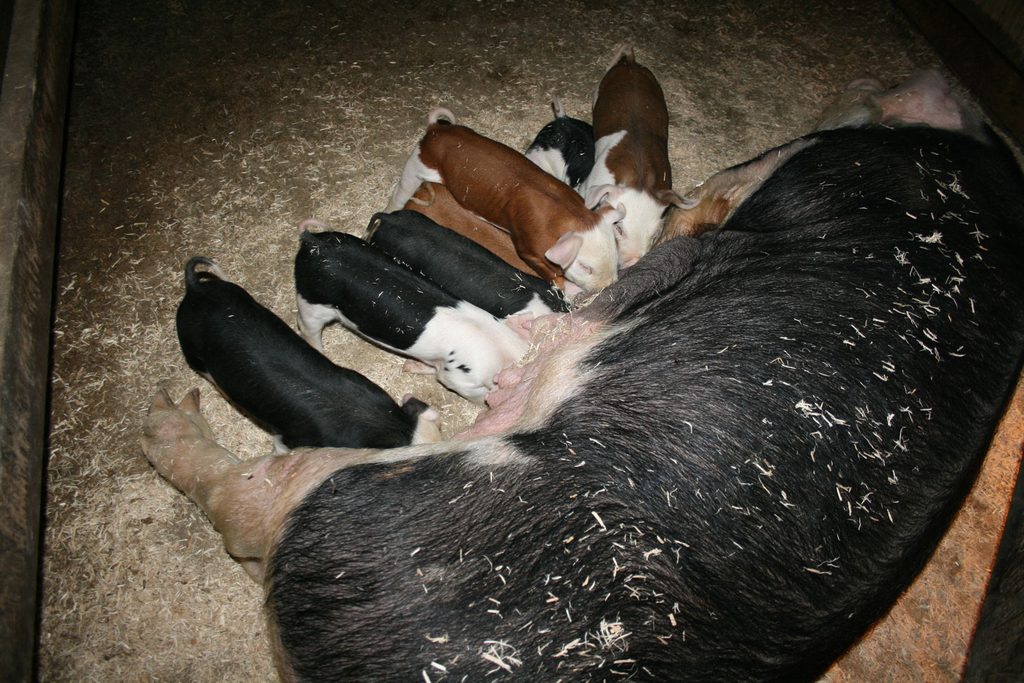
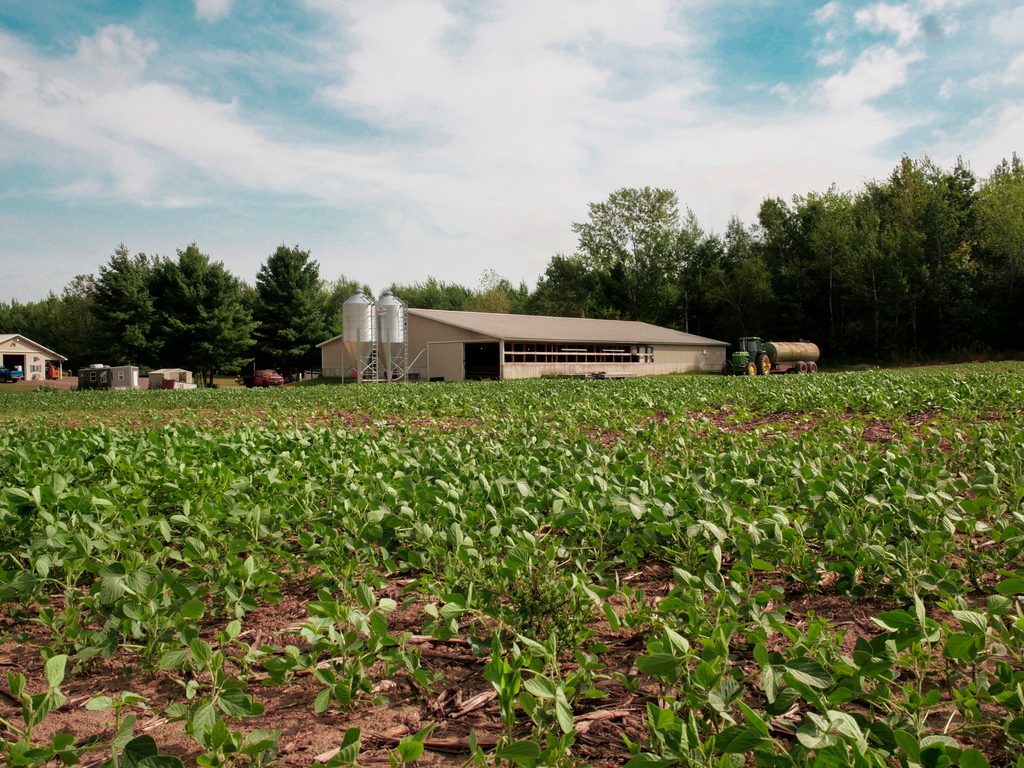
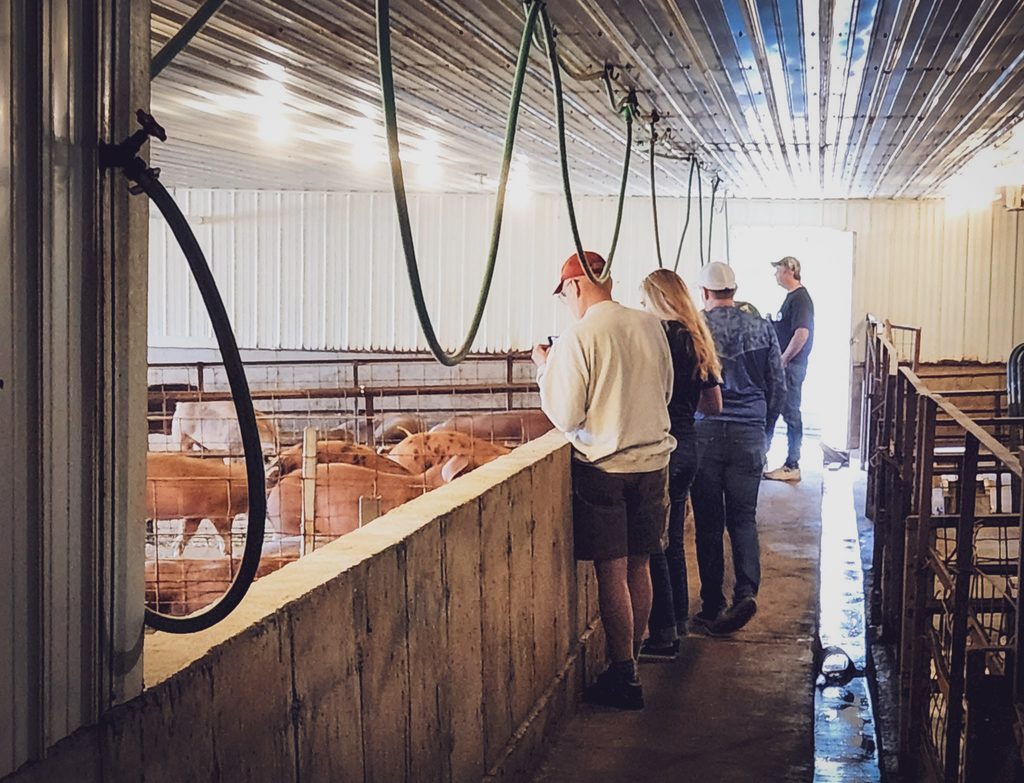
“We value giving our moms plenty of space to have their little ones while nursing. The biggest difference in a barn our size is that most factory farms would house three to four times the animals we do. We believe the health of our animals is most important and strive to give them the best care possible,” Beth Utecht explained. “We don’t feed our pigs any animal by-products, and do not use any antibiotics or growth hormones, which is very uncommon in the pig industry. Our pigs are fed corn, soybeans, and various fruits and vegetables.”
Unlike conventional hogs, each hog is unique in size and coat coloration. Chris explained, “Sometimes we’ll have some that are a little leaner. Sometimes they’re a little fattier. I mean, they’re just like us-you’re shorter than I am. Some of us are a little fatter than others. I mean, our pigs are not all as uniform as a traditional hog. So, I mean, some are going to be fatter and leaner, but they’re marbled, and they’re absolutely fabulous.”
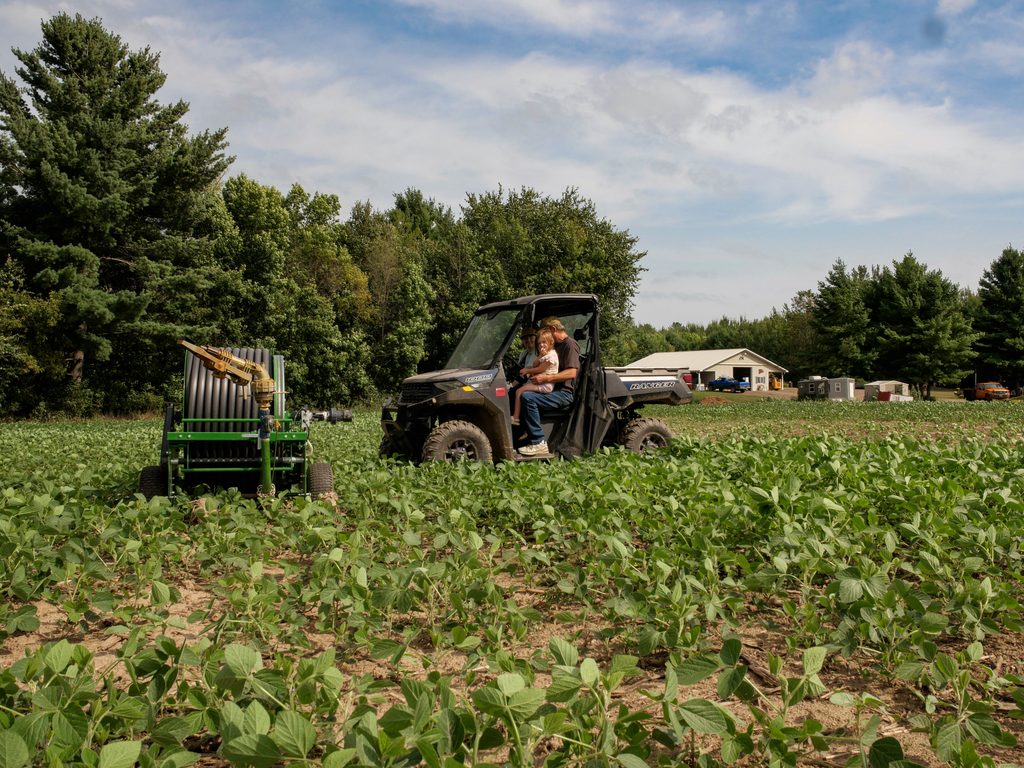
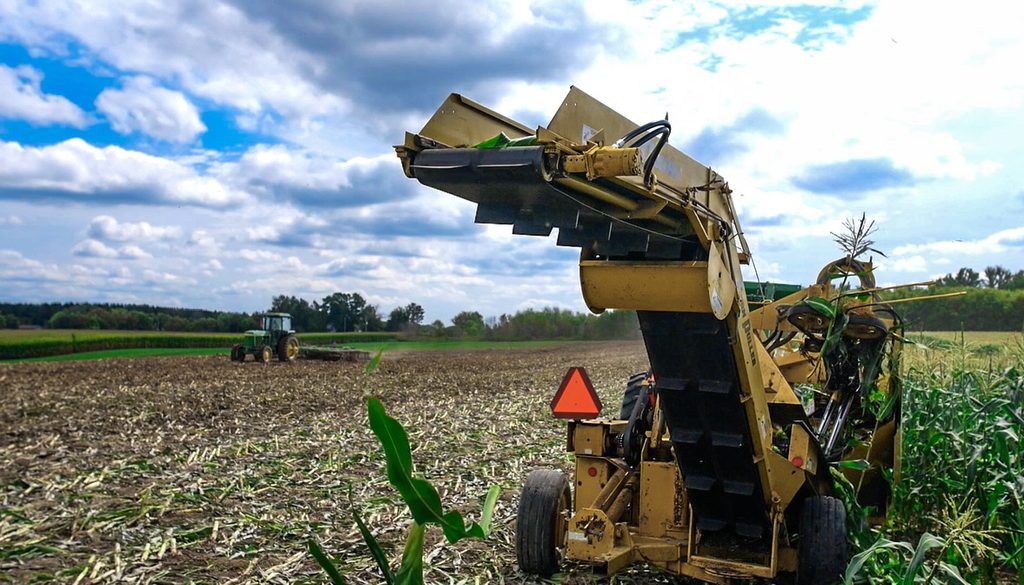
After showing us the hogs, we toured the sweet corn fields. They demonstrated how they disc the corn back into the soil. The corn will feed the soil like compost, providing vital nutrients such as nitrogen, phosphorus, and potassium that will help next year’s crop.
“So, these 10 rows right here behind me, I’m going to disc back down into the field because my next planting’s better, and I want to bring the best possible product I can to the farmers market. I mean, this is already a really amazing cob. But this one is much better, by like 10%. And it’s not much, but if I can get that every single time, you’re never going to go anywhere else.”
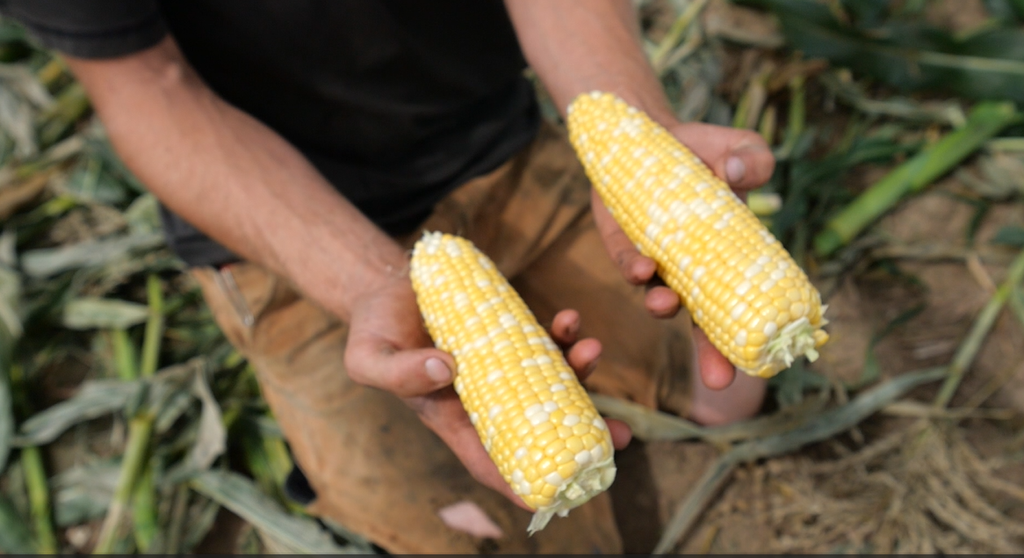
“And if you go do that and then you go try a grocery store and get a product that is not from a farmer who knows what they’re talking about, knows what they’re doing, and is very, very particular on what they do, you’ll never go back to the grocery store.”
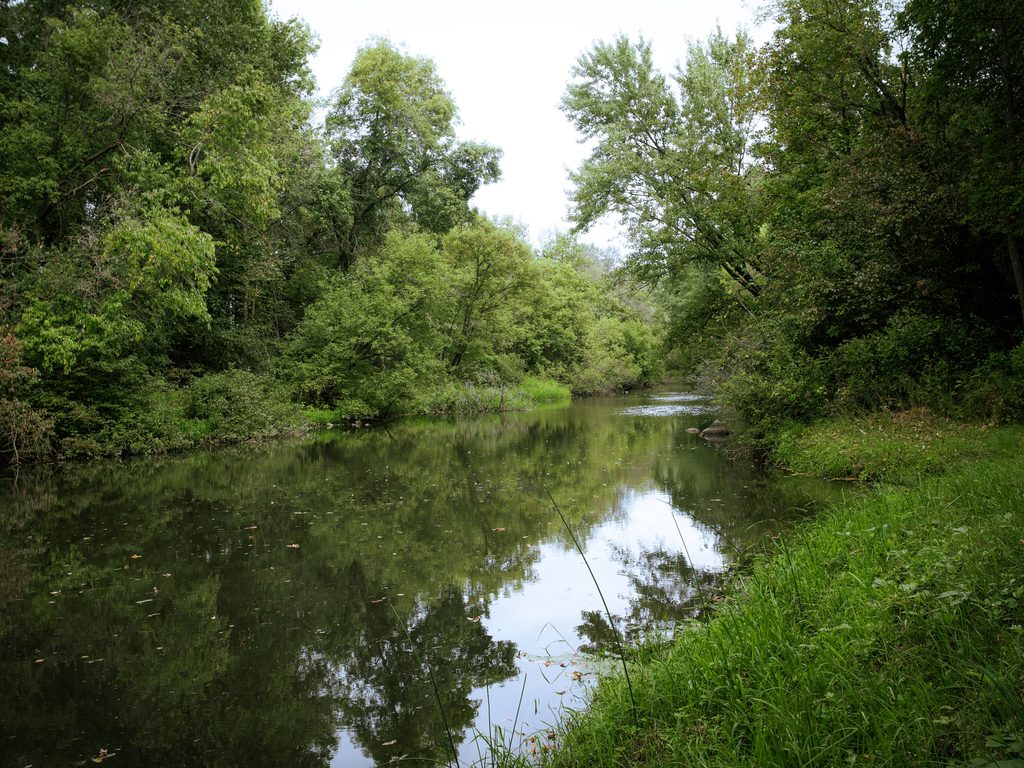
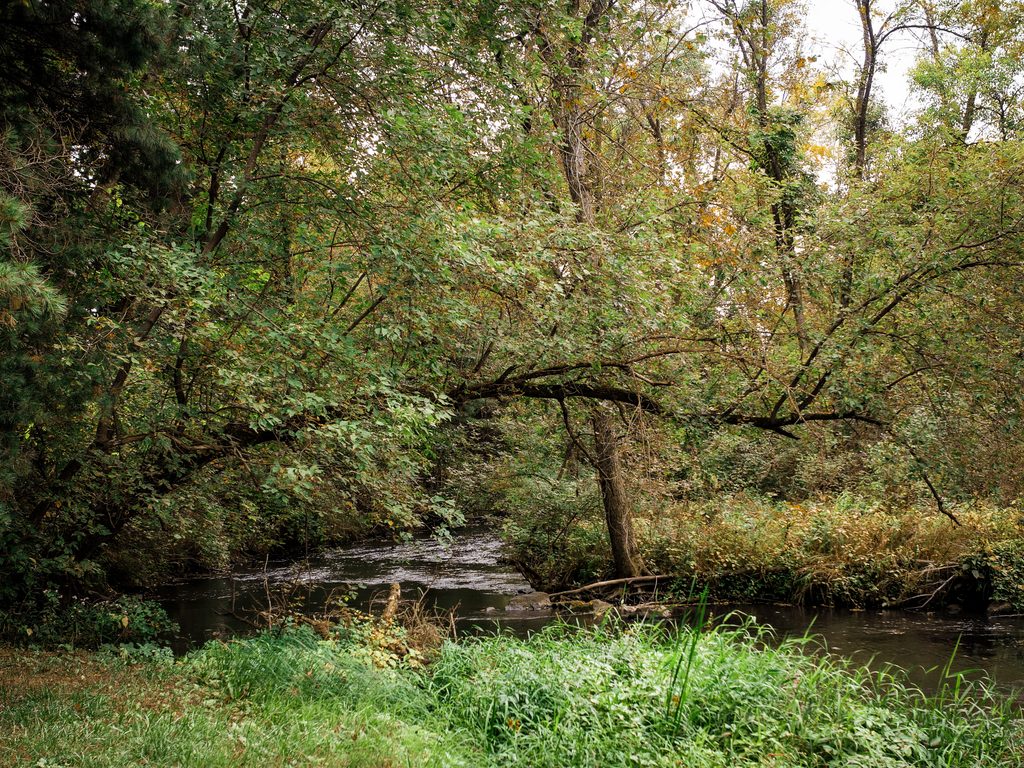
Our tour ended at a quiet, serene creek. Chris reminisced about how his boys used to go swimming in the creek. They started the farm when they were kids and had to raise baby pigs for a 4H project. In time, it grew into the operation they have now. His granddaughter ran up to him. With her in his arms, he expressed how much he loved being able to have his grandkids around on the farm all the time.
After the tour, the Utechts invited us into their house for lunch of sizzling burgers fresh from a neighboring farm. While we were eating in the living room, Chris shared stories about the surrounding farming community. They know all the neighboring farmers and work with each other. They share equipment, resources, labor, or whatever is needed. One time, while on their way to a farmers’ market before dawn around 4 am, they got stranded on the side of the road with a radiator hose. They called a neighbor, who rushed over and got their truck back on the road.
Bryan exclaimed, “I can call a neighbor at 4 am for help. And If they ever call me, I’m going.”
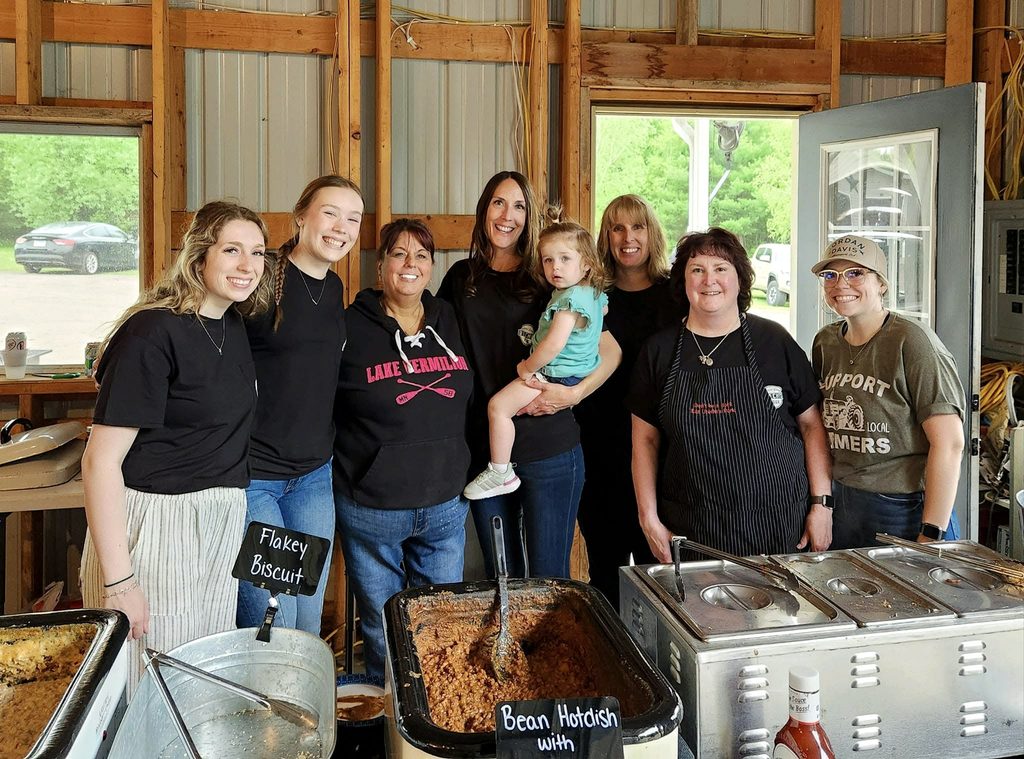
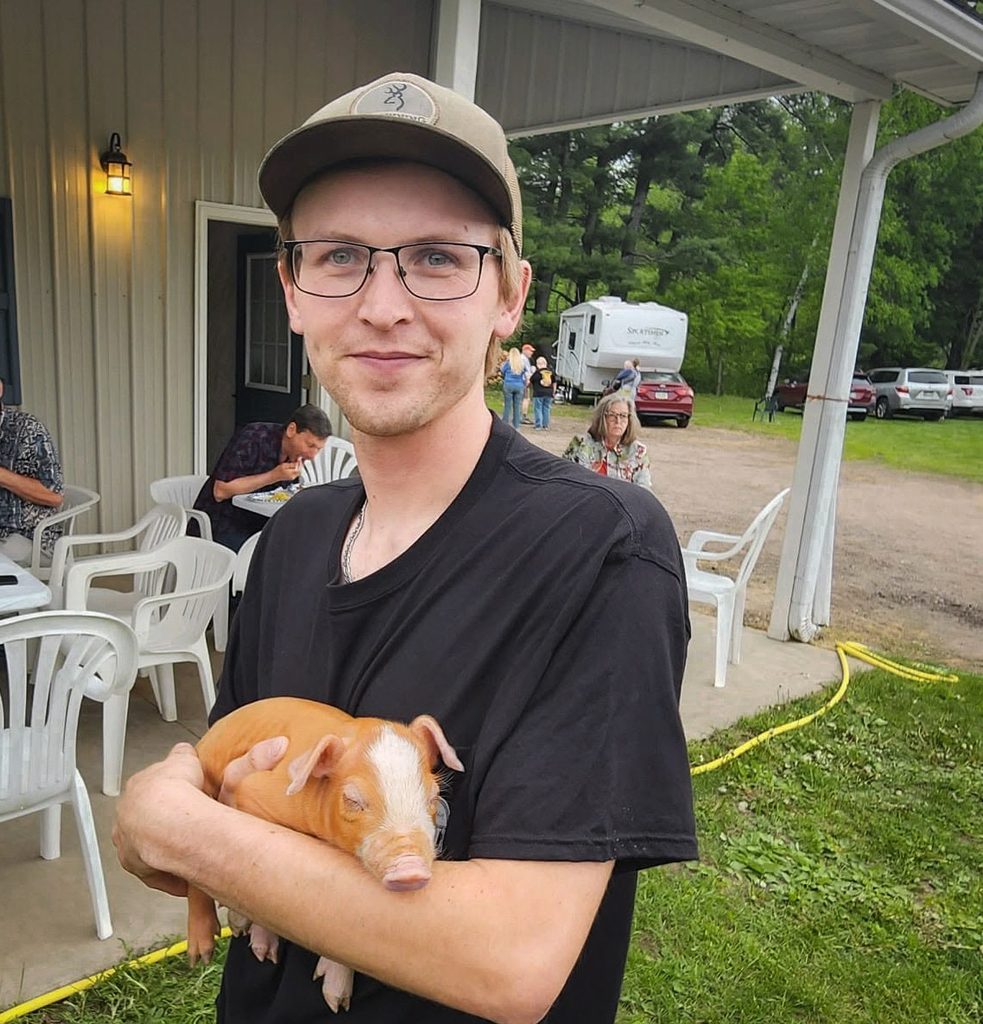
Every year, they prepare a giant buffet and open their farm for visitors. They give a tour of the grounds and barn. “We invite all our customers out to the farm where they can walk through our barn and see exactly how we do things, and show things because most people have never had that experience before.”
They’ve never seen baby pigs, or held baby pigs, or seen what a farm looks like or how it operates. And it’s a cool experience to show, whether you’re a 40-year-old or you’re an 80-year-old woman, to be able to hold a baby pig. It’s a cool experience for our customers as well and for us.”
“When you buy from a farmers’ market, whether it is a jar of jam, or a vegetable, or pork, you are buying from a farmer and the farmer’s family. There are generations of family that were a part of producing that.” Sam explained. “You are not just buying from that face at the market; you are buying from an uncle, sister, grandmother, sibling that’s out in the fields on the farm. I go to tons of markets, and people recognize me and associate me with the farm, but my dad has been out all day doing all the behind-the-scenes stuff.”
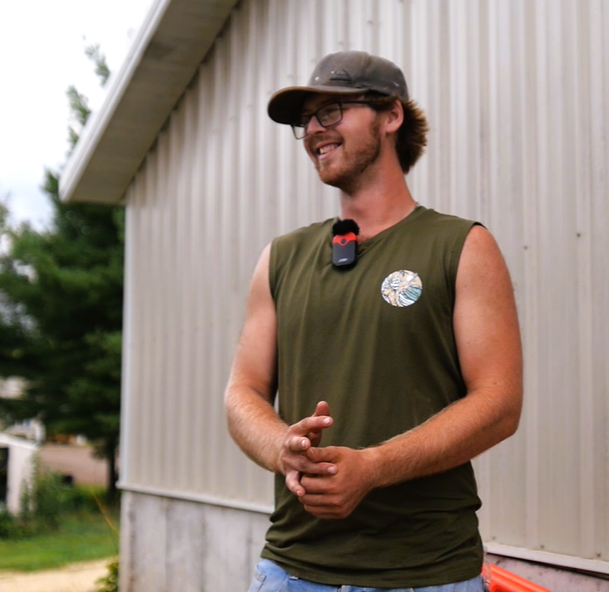
The whole point of a farmers market is that you can ask questions, that you can talk to the vendors. We raise all our own animals. I should be able to answer just about anything. And for whatever reason I can’t, I’m going to get an answer because I want to be able to explain my living to the best of my ability. You should be able to ask the vendors how they do things, why they do things this way versus that way. And that’s why we do our business.”
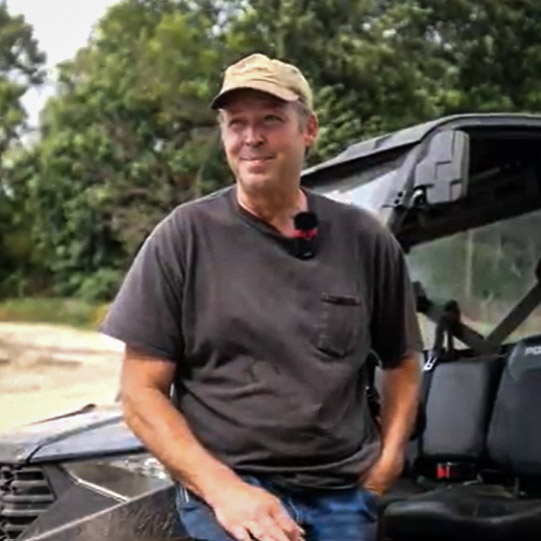
Chris compared conventionally grown produce at grocery stores versus what you can find at farmers’ markets; “There’s a huge difference between a tomato from the farmers market versus even a hydroponic one. And there’s some really good hydroponics, but you get one that’s grown in soil, the kind you can get at the farmers market right now, they are premium. I would sooner have somebody’s old tomato that a vendor rejected to sell at the farmers’ market right now than the best in the grocery store in the wintertime. There’s such a difference. And it’s like that for all the vegetables at the farmers market. I mean, everything is beautiful right now.”
My visit to their farm confirmed that the Utechts are caring and generous, and are eager to give only the best. One time, while I was getting supplies to decorate the farmers’ market info table for a special event, I went up to their stand and asked if they had any old corn cobs they didn’t need. “I gotchu.” Bryan said. He gave me an entire tall corn stalk.
The Utechs sell at Saint Paul Farmers Market year-round. You can learn more and find their schedule on their webpage. https://www.utechtshomegrownpork.com/