Urban Farming in Saint Paul
In Conversation with Jesse of Edgie’s Veggies
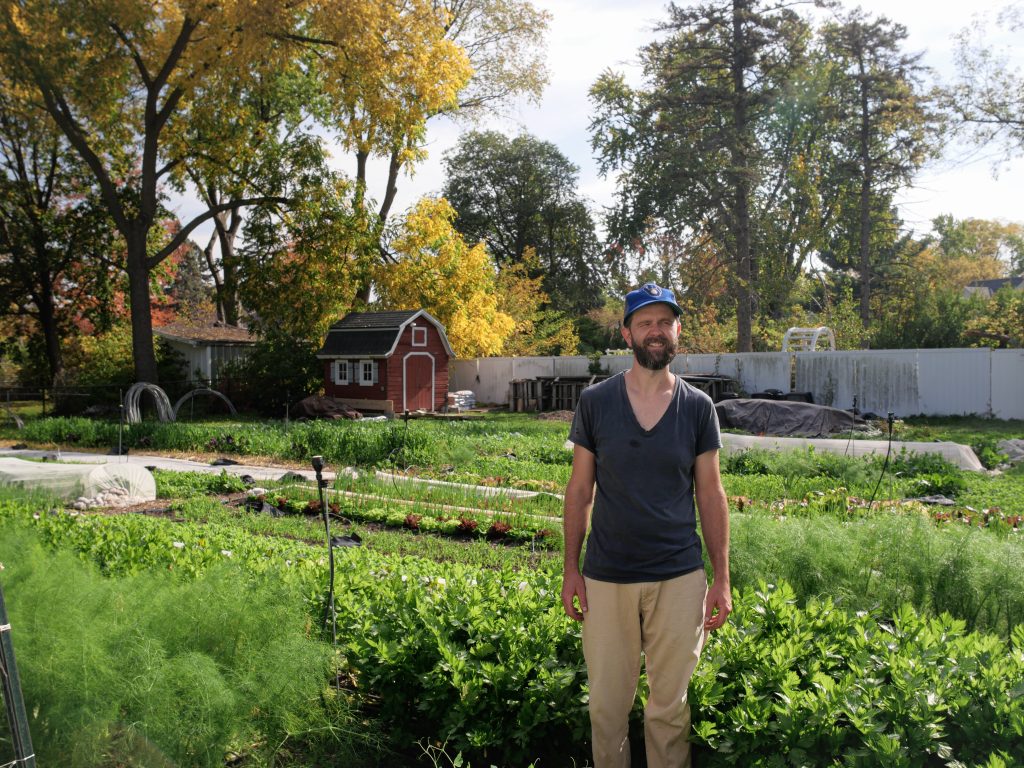
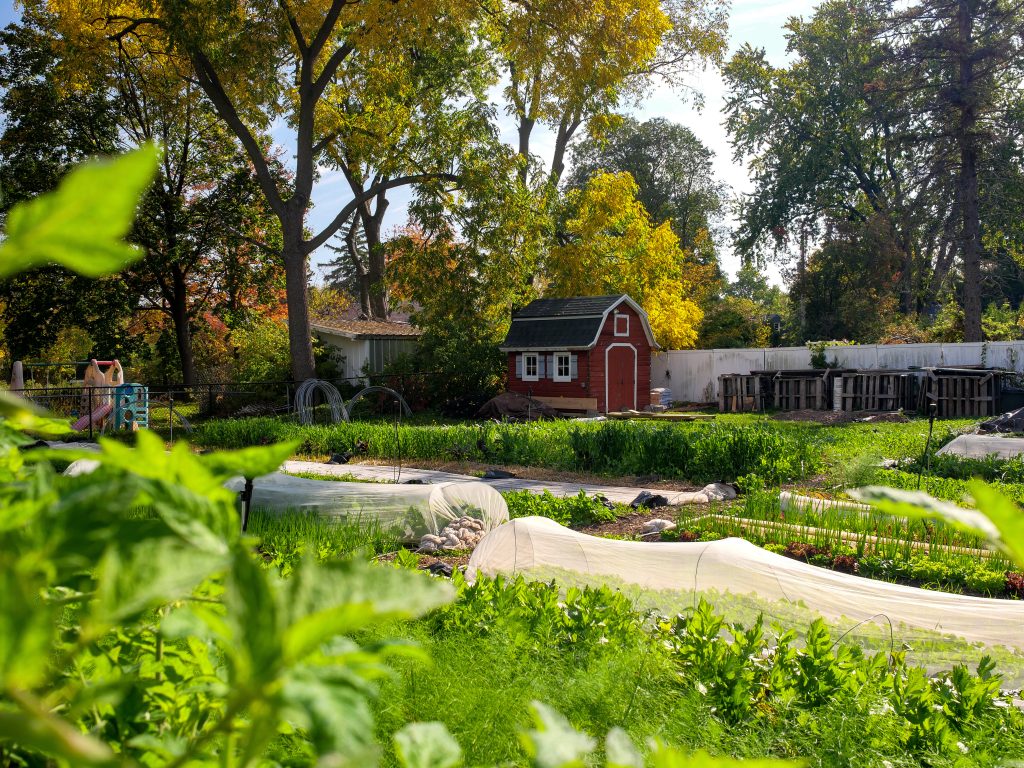
Edgie’s Veggies is an urban farm in Saint Paul managed by Jesse. It’s truly hyperlocal! After harvest, the veggies travel mere minutes to his farm stand at the Lowertown Farmers’ Market. We visited Jesse’s farm in mid-October to learn about what it’s like to have a sustainable farm right in your backyard.
Tell us a little bit about your farm. What do you do? What crops do you grow?
This is my farm. It’s in our backyard. I mostly grow salad greens. So, I spend a lot of time growing lettuce and arugula and then a handful of other things that people have told me they want to eat. We got this particular spot started when we bought the house in 2022. I started the farm in 2019.
The story is, I was talking with my landlord out in front of the apartment, and this gentleman walked across the street and introduced himself to us because he owned the bar across the street, and within a couple of minutes my landlord said, “Oh, this guy wants to be an urban farmer. He’s looking for land.” And this gentleman said, “Oh, I got some property if you want to come check it out.” And so I started at my first location in another backyard south of the city, and I washed all my produce in West St. Paul at our apartment. After about 3 years, we moved here.
Why did you start? What inspired you to get into farming?
I got interested in farming first through cooking, just enjoying making food, you know, and cooking with ingredients and making delicious food. Gardening was the first thing that I was interested in. It was interesting to me to not just make some good food but then grow delicious ingredients to make that food with. It wasn’t until I worked at my first farm that I kind of saw how it all came together. And even though it was a really hard job, and it probably wasn’t the best initial experience in farming, I ended up coming away from it feeling really excited about learning more.
And so ever since then, I’ve just kind of put myself in places to learn about farming, either through reading or online or in person. I worked at an urban farm in the cities, volunteering for several years, and just kind of found new opportunities to kind of grow that skill and knowledge. At one point, we had a bunch of different gardens across the Twin Cities, my wife and I. When we got married, I decided to really give it a shot. That’s the point we tried to look for space and thought about it more as a business. I did planning around that. So, from I’d say my first farming experience to my first actual farm, it was 11 years. It’s our eighth season. It never gets boring–can tell you that.
Tell me about the different crops you grow. What’s in season now? What’s your most popular crop?
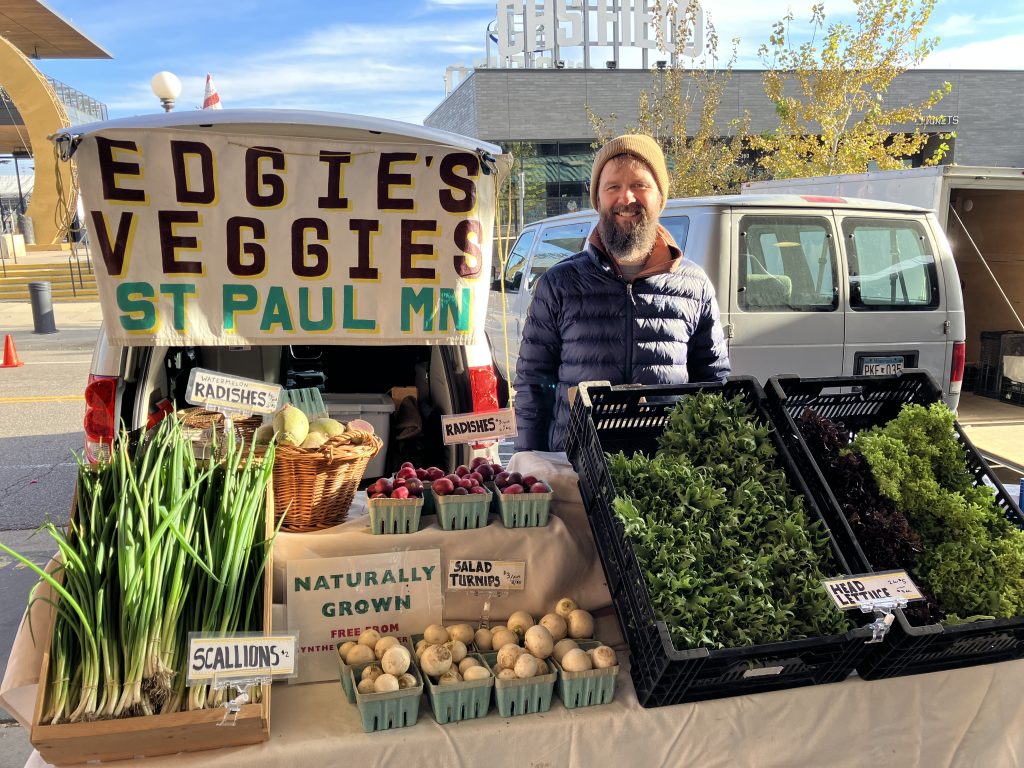
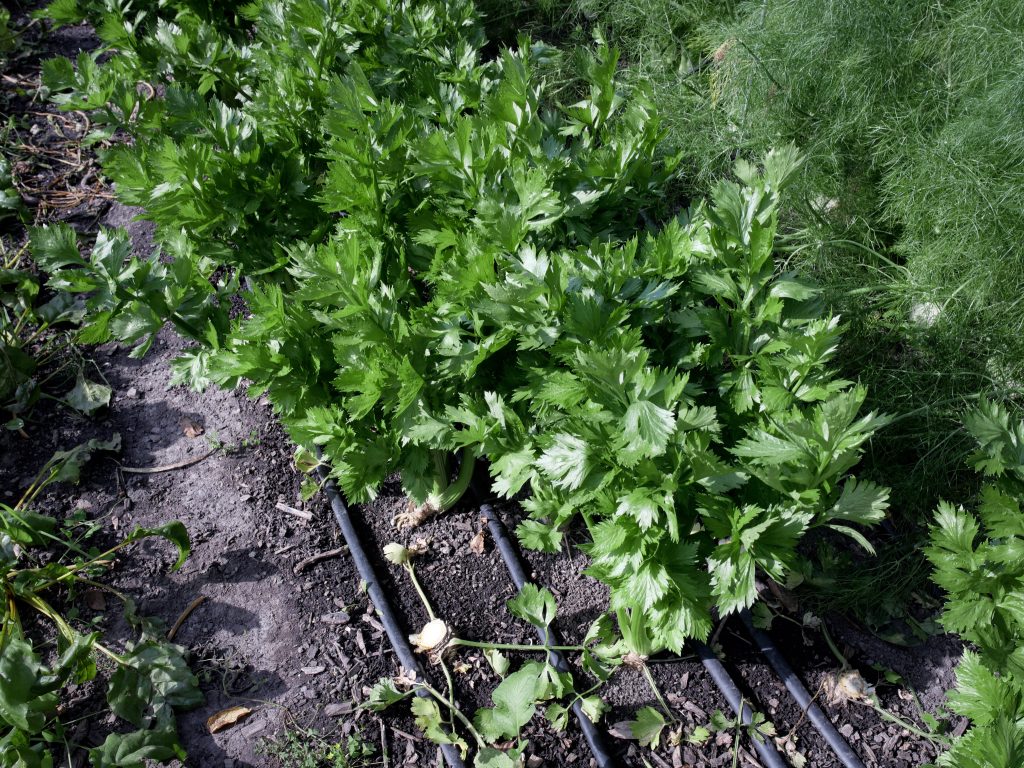
Pretty much all season for me is a salad mix, which is normally a mix of lettuce, pea shoots, and arugula. Those things are kind of what we built the farm around. And so other than that, I have a lot of fennel in the ground. I’ve got a lot of celery. I have a little bit of watermelon radishes and these turnips. We call them salad turnips. It’s a really nice, fresh-eating turnip, not like a turnip you’ve maybe been used to eating before, where you don’t have to cook it. It’s very fruity and sweet, and you eat it like a radish. And then I’m doing some experiments too. I throw in a couple of experimental crops here and there. So, I’m trying radicchio for the first time. I’m probably bringing that to market this week.
What’s your favorite part about the farmers’ market? What do you enjoy most?
Other than setting up a display, my favorite part is just talking with people. It’s so fun to connect with people at the market. To me, it feels very natural to connect with people for food, and I have a really good time doing that.
What are your farming practices? How do you deal with pests? How do you maintain soil fertility?
Organic certification is really hard to get, especially as an urban farmer. Basically, what I tell people is I follow organic principles. And what that can mean is a whole list of things. In my case, what I’m trying to communicate with people is, first of all, about the way I grow, and, like, how I value caring for the land I’ve been given to grow it on. So, I follow a few basic soil health principles.
One of them is to always keep something growing in the ground at all times, whenever possible. The other thing is to keep it covered; keep the soil covered as much as possible. And the other big one is not to disturb it. As much as possible. So, the way that I have achieved that, or the way that I try to do that, is to keep plants growing as much as possible, and to keep the soil covered. I rely on doing something called quick turnover. So, as soon as a crop is done, say, arugula, or lettuce, or fennel, or whatever it may be, I am immediately, within a few days, clearing off the debris and planting the next thing.
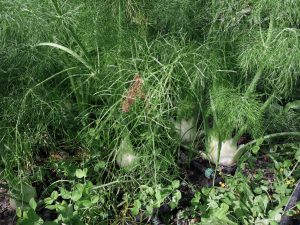
And so the idea is the roots are constantly feeding the biology under the soil, and that soil is as much as possible being protected from the sun and the rain. It keeps the soil cooler and healthier. It also does a lot of good for the plants to help them thrive.
And then as far as disturbance goes, I don’t do a whole lot of tillage. I’m not opposed to that necessarily, but I’ve gotten away with being able to do what I do without a tiller. I think it’s done remarkably well without needing to do a whole lot.
We did till initially to start the garden to rip up all the ground, but, yeah, we try to do as little disturbance as possible. So, with those three things in mind, at least, I believe that I’m following principles that allow for the best possible, healthiest, most nutritious, and delicious vegetables you can get. Maybe. We’ll see. And then, other than that, technically speaking, the way that I do this is I have what’s called permanent beds, and so where you see plants growing, a person doesn’t ever walk. If you want to walk, there’s a walkway, and that’s something that we teach our kids by the time they’re one and a half. It’s like, ” You walk in the walkways. This is where you walk”, and so that keeps that soil from being compacted. We don’t ever have to restart and reset the garden. This is always where something grows, and this is always where somebody walks, and so when I plan my year, I have a garden laid out on a spreadsheet, and I just plan around all these beds that we’ve marked, and we’ve kept from treading on over the years.
Have you ever used insecticides or herbicides?
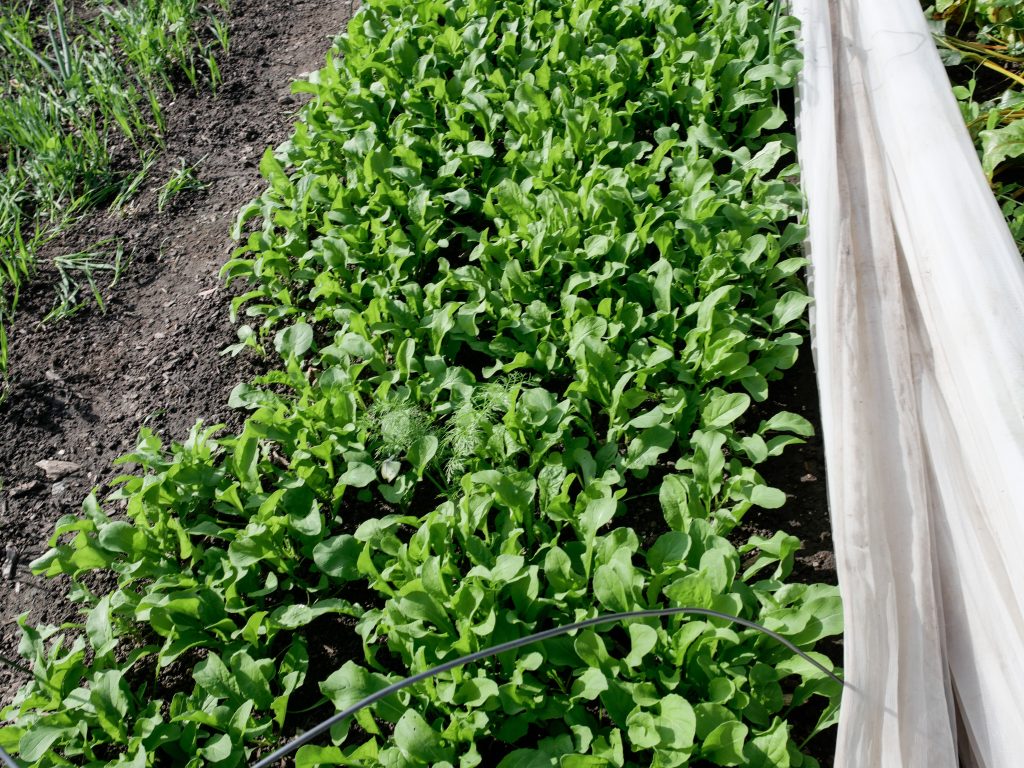
I don’t spray any kind of insecticide, even organically certified stuff. Partly because I don’t really know how to do it and partly because I don’t want to. Most of my crops don’t really need any sort of special attention in that regard. I don’t have a lot of worries about bugs except for the arugula and salad and these salad turnips. The salad turnips in particular attract a lot of bugs. There’s a cabbage looper that goes after the leaves. There’s something called a flea beetle that goes after the leaves. And then there’s a root maggot which goes after the roots. I rely on these things looking perfect to sell. If the roots are all eaten up and the leaves are all shredded, I don’t feel good about sending them home with people. So, to handle that in terms of mitigating the bug damage, I use things like insect netting, which is exactly what it sounds like. It’s a flexible netted fabric that you can drape over directly on top of a crop or you can put it up as I have it here suspended over hoops and it keeps the bugs off. And so when I have to harvest, it’s pretty easy. You just pull this back, and you’ve got access to what you want to harvest for market. So, this has been one of those tools that has kind of been my insecticide in a way, but it’s just a way to grow things to exclude rather than kill.
What are some common questions you get from customers at the farmers’ market?
One thing that people will ask is – say they’re buying a bag of salad mix on Saturday morning– And they’ll say, I have a party on Thursday night. Is this really going to be okay? Because we all have the experience of buying things from the grocery store, and the California greens have been out of the field by the time you get it home for at least a week, maybe longer, and we’re not used to having things so fresh, and so the greens, or most of the vegetables you buy at the farmer’s market, you can take home, and it will stay fresher longer than what you probably will ever get at a grocery store, because we’ve cut out all that transportation, and warehousing, and stocking on a shelf, and et cetera.
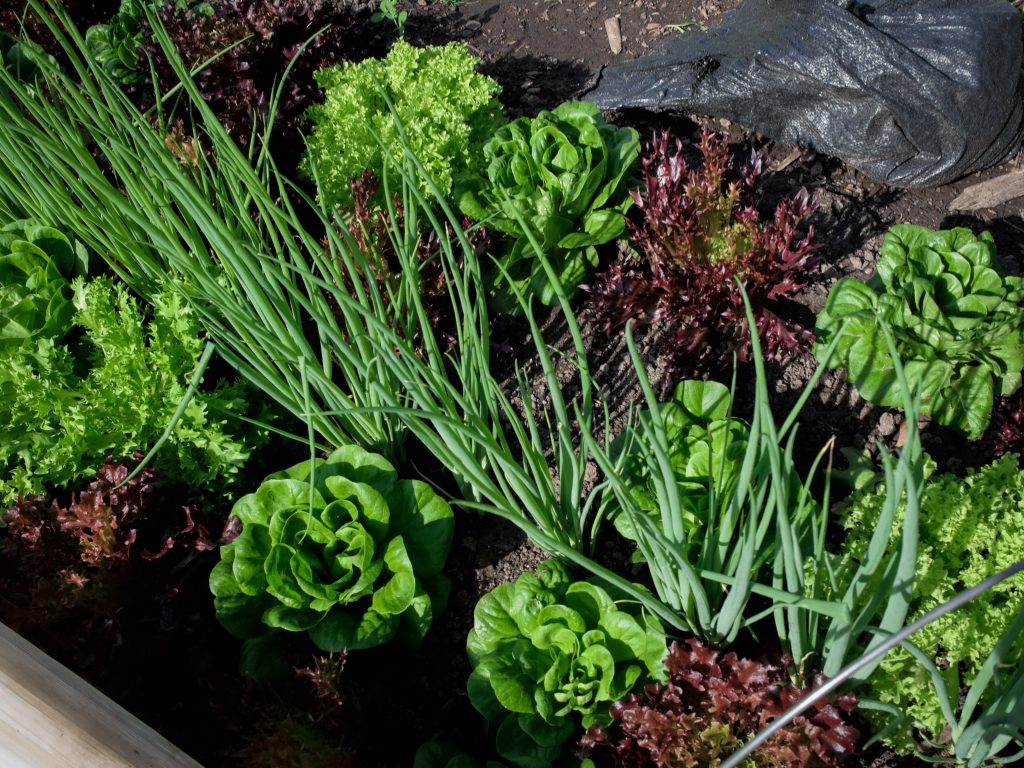
So, that’s one thing that I think a lot of people know that, or can taste it, or can say, like, wow, this is fantastic; this salad mix, for example, is the best I’ve ever had. I think a lot of that is because I cut it two days ago, and now you take it home, and you’re eating it within three days of it coming out of the ground. You can’t buy that in a store.
Anything that you can tell us about you? What do you like to do in your free time?
Oh, in my free time? Well, lately, in my free time, I’ve been watching baseball. Or listening to it. I don’t have a way to watch it, but I’ve been listening to baseball a lot because my team’s in the playoffs, so that’s exciting. The Milwaukee Brewers. So, I like listening to baseball. We have kids, so, you know, we don’t have a lot of extra time. I was supposed to go to a concert this week –Deer Hoof, kind of a noisy rock band– and I had to cancel because I was too wiped. Anyway, we don’t do a lot of, like, fun things that maybe people who don’t have kids can do. But we spend a lot of time with our kids; we spend a lot of time with friends, with all of our kids together, and in our spare time, we’ll have dinners with neighbors or with our friends. It’s a good way to get out of the house and have a good time that’s not just at home, because, you know, for farming, it’s like you’re surrounded by your work all the time, and so it’s very easy to just keep working.
Jesse sells at the Lowertown Saint Paul Farmers’ Market during the regular market season. Learn more about his farm on his website:
Edgie’s Veggies | Edgie’s Veggies