Minnesota Sweet Corn
“What more can a reasonable man desire, in peaceful times, in ordinary noon, than a sufficient number of ears of green sweet corn boiled, with the addition of salt?” – Henry David Thoreau
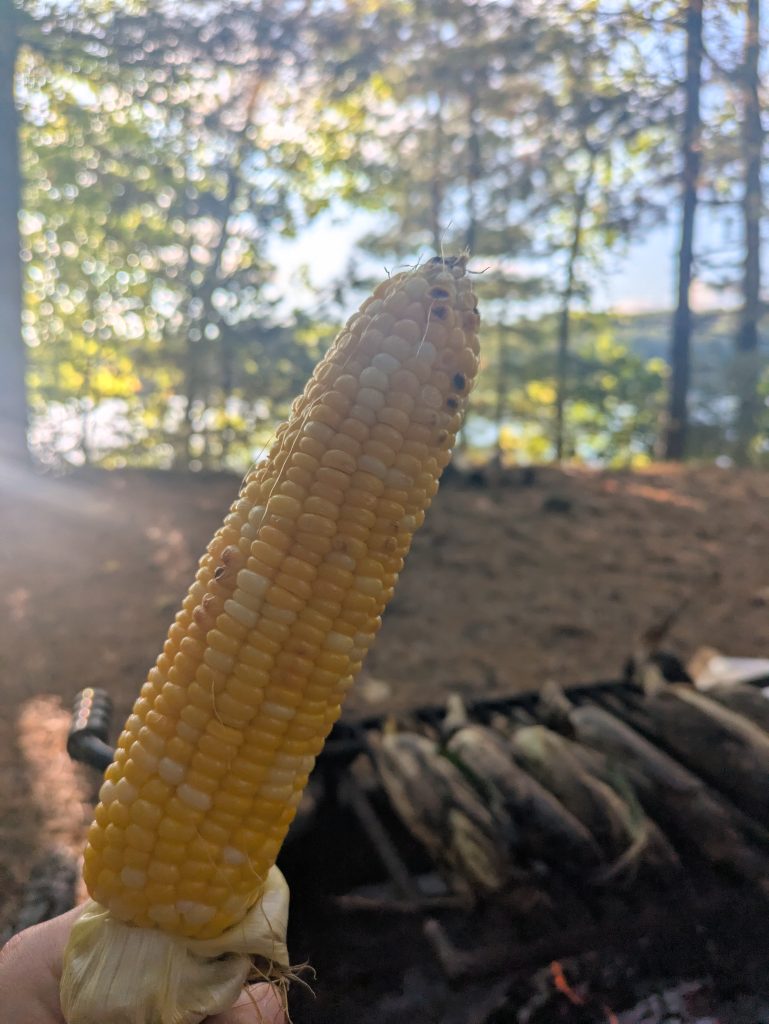
Sweet, buttery, salted grilled corn is the outdoor cooking staple. Perhaps your richest memory of sweet corn is stopping at a roadside farm stand on your way to camping, then later grilling the fresh cobs over a fire. From backyard parties with a buffet in the garage to grilling at a cookout overlooking a deep blue lake, biting into the buttery, juicy grain tastes like late summer and all the activity and fun that comes along with it. And how could you visit the Minnesota State Fair without crunching into a corn-on-the- cob?
Corn is grown and eaten on every continent except Antarctica. We can thank Indigenous people for domesticating corn’s ancestor, teosinte, about 10,000 years ago in what’s now Mexico. It was widely traded throughout the Americas, also called Turtle Island. Indigenous people developed hundreds of varieties, including sweet corn. “Three Sisters” farming entails planting corn, climbing beans, and squash together. The corn serves as a natural trellis for the beans, the beans fix atmospheric nitrogen, making it available in the soil for the corn and squash to use, and the squash’s wide leaves stifle weeds, preserve soil moisture, and deter pests. This low-maintenance Indigenous farming practice fed communities for millennia. Native corn seeds have been passed down for countless generations and hold deep cultural heritage. Locally, Dream of Wild Health preserves seeds of numerous native corn varieties.
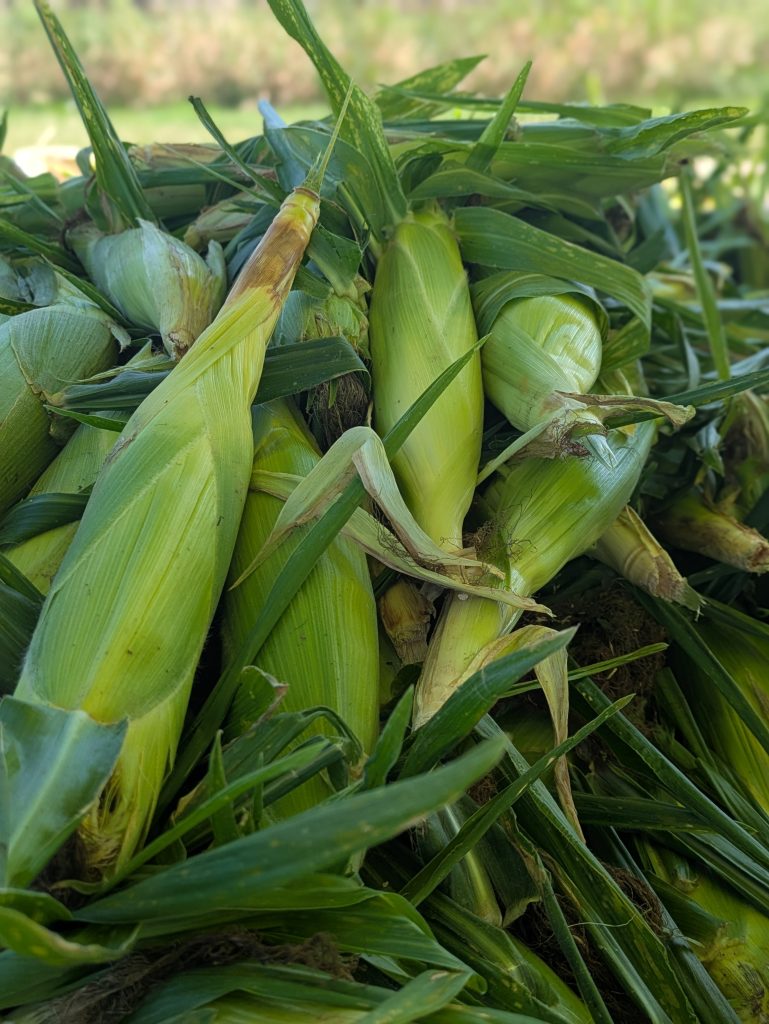
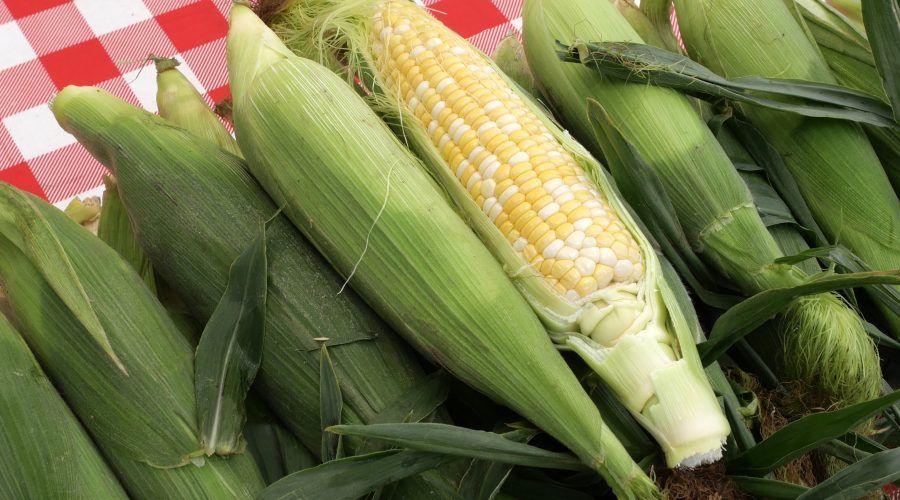
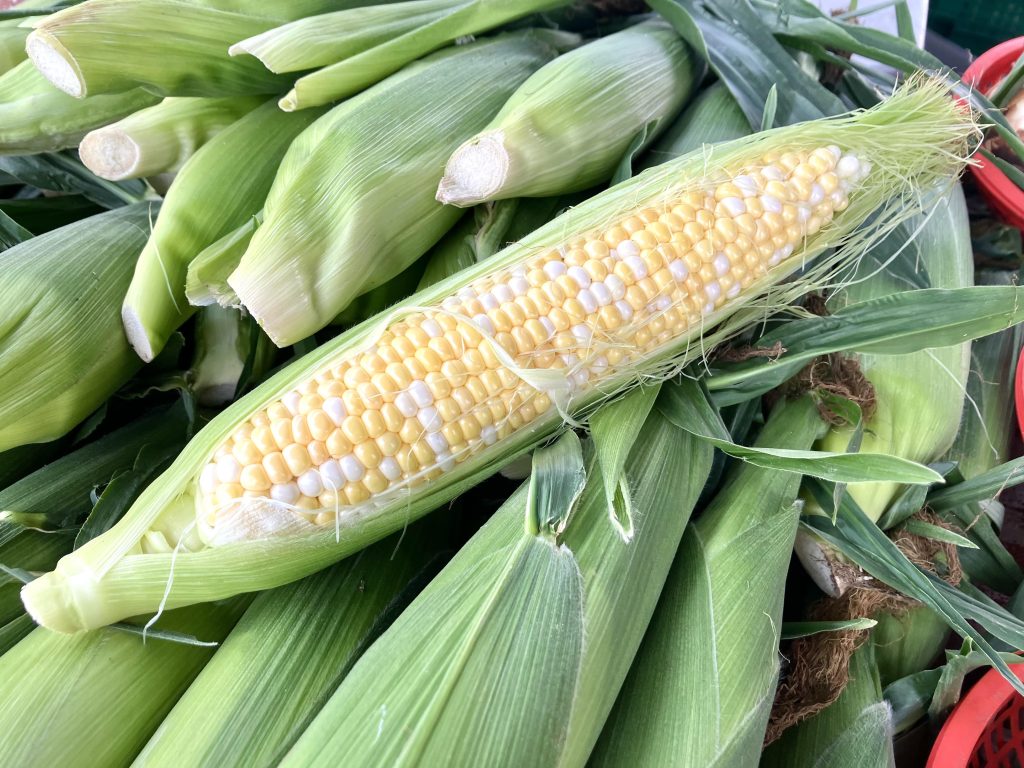
About 99% of corn grown in Minnesota is field corn, used for livestock feed, ethanol, industrial or consumer products, or other food additives, such as high-fructose corn syrup. Field corn is left on the stalks to dry until harvest in late fall. Sweet corn, on the other hand, is grown for our consumption. Sweet corn was developed by Indigenous farmers long before European colonization. Sweet Corn typically peaks in Minnesota in late July through mid-September. It is sweet because of a natural genetic mutation that slows the conversion of sugars to starch. Modern sweet corn can have as much as 40% sugar content. Responsible for roughly a quarter of all sweet corn grown nationally, Minnesota ranks as the number one producer! Sweet corn is best when eaten shortly after harvest before the sugary content is lost. Buying at the Farmers’ Market is one of the best ways to get the freshest sweet corn!
Sweet Corn – Minnesota Grown. Minnesota Grown’s resource on sweet corn, featuring a sweet corn finder, tips for buying, cooking, and preserving it.
Home – Dream of Wild Health. Check out this local organization recovering Native food! They have a corn festival coming up this fall! (20+) Corn Fest | Facebook